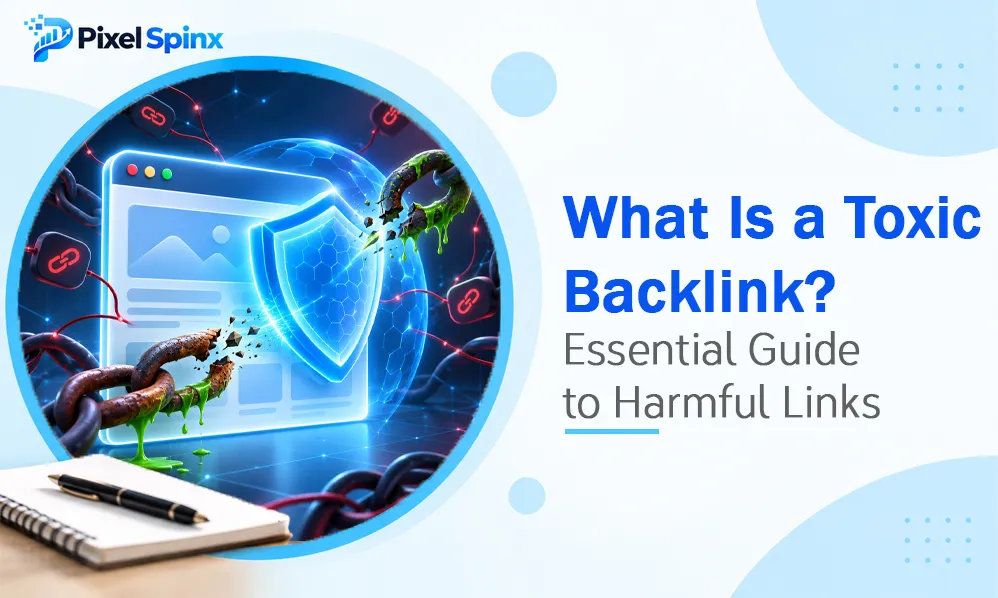
What Is a Toxic Backlink? Essential Guide to Harmful Links
Backlinks are an important part of SEO because they help search engines understand how websites are connected. However, not every backlink is valuable. Some links come from spam websites, link schemes, or irrelevant sources and may create problems for a website’s backlink profile.
If you work in SEO, understanding what is a toxic backlink can help you identify suspicious links and maintain a healthy link-building strategy.
What Is a Toxic Backlink?
A toxic backlink is a term commonly used by SEO tools to describe an incoming link that appears spammy, unnatural, or potentially harmful to a website’s search performance.
These links may come from link farms, automated link-building networks, hacked websites, or irrelevant directories.
However, Google does not officially classify backlinks using a toxicity score. The term is mainly used by third-party SEO platforms to identify potentially suspicious links.
Google focuses on manipulative link patterns that attempt to influence search rankings rather than treating every low-quality backlink as harmful.
You can learn more through Google’s official link spam policies.
Common Examples of Toxic Backlinks
Understanding where suspicious backlinks come from makes it easier to review your website’s link profile.
Links From Link Farms
Link farms are groups of websites created primarily to exchange or sell backlinks. They often publish low-quality content and link to unrelated websites.
Irrelevant Website Links
A backlink from an unrelated website is not automatically harmful. However, a large pattern of unnatural links from unrelated sources may deserve investigation.
Automated Backlinks
Some services use automated software to create thousands of backlinks through comments, profiles, directories, and other website sections. These links may violate Google’s policies when created to manipulate search rankings.
Paid Links That Pass Ranking Credit
Buying or selling backlinks that pass ranking credit without properly qualifying them can violate Google’s link spam policies. Paid placements should use appropriate attributes such as rel=”sponsored” or rel=”nofollow”.
Hacked Website Links
Sometimes attackers insert unwanted links into hacked websites. These links may appear without the website owner’s knowledge or permission.
How to Identify Toxic Backlinks
A backlink audit can help you understand which websites are linking to your domain.
Review your backlink profile: Use tools such as Ahrefs Backlink Checker to explore referring domains, anchor text, and incoming links.
Check anchor text: Look for unusual patterns, such as repeated commercial keywords or unrelated phrases pointing to your website.
Investigate referring websites: Check suspicious domains for their content, purpose, and overall quality. Websites filled with unrelated articles and unnatural outbound links may require closer inspection.
Compare link growth: A sudden increase in backlinks does not automatically indicate a problem. However, an unexplained spike combined with manipulative link patterns deserves attention.
Review manual actions: Google Search Console provides a Manual Actions report that can show whether Google has identified an unnatural linking issue affecting your website. Read Google’s manual action documentation for more information.
Can Toxic Backlinks Hurt Your Website?
Not every suspicious backlink will damage your rankings. Google’s systems are designed to identify and ignore many spammy or unnatural links automatically.
However, backlinks created through manipulative practices can become a serious concern, especially when a website participates in large-scale link schemes.
Possible consequences include:
- Manual actions for unnatural links.
- Reduced search visibility for affected pages.
- Additional work to investigate and clean up a backlink profile.
- Difficulty maintaining a natural link-building strategy.
The important point is to investigate patterns instead of panicking over individual low-quality links.
How to Remove Toxic Backlinks
If you identify links created through manipulative SEO practices, take a careful approach.
Contact the Website Owner
Start by contacting the website owner and requesting removal of the unwanted backlink. Keep a record of your communication.
Use the Google Disavow Tool Carefully
If you have a considerable number of artificial or spammy links and they have caused, or are likely to cause, a manual action, Google’s Disavow Tool may be appropriate.
Google recommends using this advanced feature cautiously. Most websites do not need to disavow backlinks because Google can usually assess which links to trust.
Read the Google Disavow Links guide before submitting a disavow file.
How to Prevent Toxic Backlinks
Prevention starts with a responsible link-building strategy.
- Earn links through useful and original content.
- Avoid automated backlink packages.
- Do not participate in manipulative link exchanges.
- Review your backlink profile periodically.
- Choose relevant websites for guest posting.
- Monitor the quality of backlinks built by SEO providers.
Website owners should also stay informed about changing digital platforms and technology trends. For additional technology-related insights, explore WaveTechGlobal.com Mobile Gurus, which covers mobile technology and digital topics.
A healthy backlink strategy focuses on genuine editorial references rather than collecting large numbers of links.
Conclusion
Understanding what is a toxic backlink is important for maintaining a responsible SEO strategy. Suspicious links can come from link farms, automated campaigns, hacked websites, and manipulative paid placements.
However, not every low-quality backlink requires removal or disavowal. Review your backlink profile carefully, focus on genuine link-building practices, and follow Google’s official guidance before taking action.
Frequently Asked Questions
What is a toxic backlink in SEO?
A toxic backlink is an SEO-tool term for a potentially harmful or unnatural incoming link. It may come from spam websites, link schemes, or manipulative link-building activities.
Do toxic backlinks always hurt rankings?
No. Google often ignores spammy links automatically. A suspicious backlink does not automatically mean your website will receive a penalty.
Can I remove toxic backlinks?
You can contact the linking website and request removal. If specific conditions are met, you may also consider Google’s Disavow Tool.
Which tools can identify toxic backlinks?
SEO platforms such as Ahrefs and Semrush provide backlink analysis and suspicious-link indicators. Their toxicity scores should be treated as investigation signals, not proof of a Google penalty.
Should I disavow every low-quality backlink?
No. Google recommends using the Disavow Tool only in specific situations involving considerable spammy or artificial links and a manual action or likely manual action.